A large number of customers feel that amazing customer service begins on the phone at your call center. In reality, a huge 73% of customers see respect for their time as great service. Therefore, your call center representatives should take care of calls and clear up inquiries fast.
Explaining that not answering phone calls or deliberately avoiding them may harm the company’s relationship with its customers and its reputation.
The constant stress of being in a call center, where agents must handle a lot of calls from upset customers, can often be discouraging for them. As a result, more people in the call center industry try to avoid answering calls and it’s vital for leaders to address this issue to protect company profits. In this blog, we will review call avoidance, its adverse effects, causes and how to identify them.
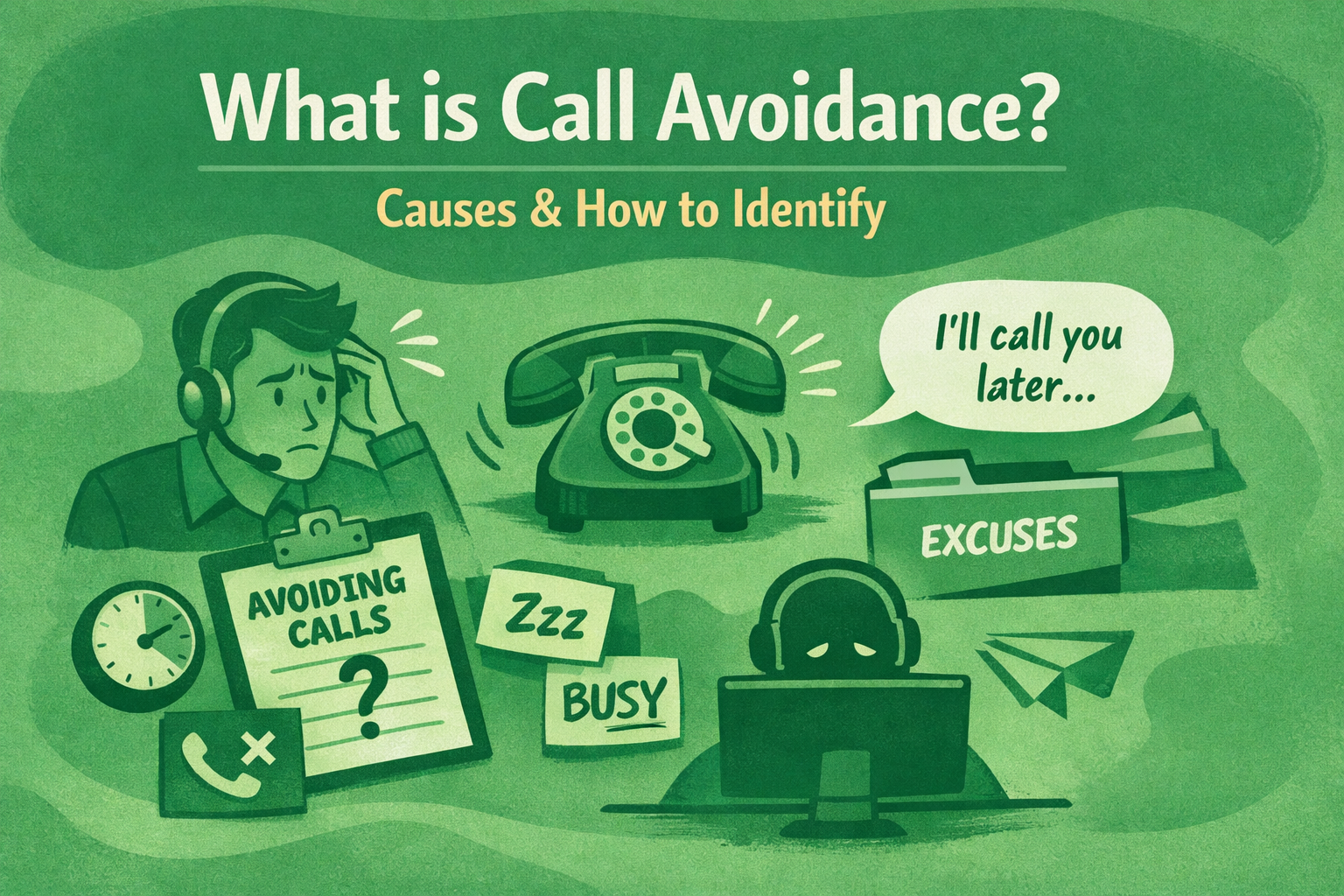
What is Call Avoidance?
All the ways in which call center agents try to avoid taking or making phone calls are known as call avoidance. Both the behaviors listed below can be thought of as strategies to avoid taking calls from clients:
- Giving callers the option to talk to other teams, different agents, or return to the queue.
- Taking the time to keep talking with a customer even after solving their problem.
- Muting customers until they bring the call to an end.
- Stay in conference mode when switching the call to another team member.
- Performing After-Call tasks for a period that is longer than expected.
- Having too many breaks during the busiest moments.
Within call centers, call avoidance may include specific strategies to lower inbound call numbers and send customers to other forms of customer communication. The aim of call avoidance in this case is to drop the overall number of calls, use resources more efficiently and boost how the call center functions.
How Call Avoidance Can Affect Your Business?
Declining phone calls can result in problems for your business. Knowing about them is vital for businesses trying to ensure their customers are happy, take advantage of sales and build a good environment at work. Many of the most frequent consequences are:
1. More Depressed Employees
If employees are avoided through frequent lack of management calls, it can make them feel unhappy, experience unease at work, burn out, work less efficiently and leave the organization more often. Not trusting one’s skills to speak or knowing much about the company may suggest disinterest at work.
Being an assistant during phone calls helps boost the team’s mood and confidence. If people feel motivated and capable in their working environment, their efficiency and level of satisfaction increase. According to studies, firms with a strong employee morale are 5.5 times ahead in boosting their productivity.
2. Less satisfaction among customers
If you don’t answer calls, customers will probably be less satisfied with your service. Consumers look forward to getting quick replies to their concerns and problems. These kinds of call centres lead to longer waiting periods and unhappy customers. When clients do not get prompt or proper attention from your firm, it could lead them to have a negative view.
If people are unhappy with your services, they may look for new solutions, affecting your company’s image. There could be a decrease in trust and loyalty to the brand. To keep customers loyal for a long time, handle all phone calls in a fast and polite manner.
3. Loss of Sales
Failing to answer calls may mean you miss important business chances. People interested in our business get in touch to buy, know more or ask about our products or services. You won’t be able to make sales from these calls if you let them go unanswered.
This could possibly affect your earnings and future development. A missed call could mean that your competitor picks up another client. Ensuring that your staff can address phone calls and aid potential clients plays a major role in catching new customers.
What are the Main Reasons of Call Avoidance?
Many people who work in call centers may want to find ways around receiving calls for different reasons. These include:
- Managing demanding customers:
Every day, agents can face demanding customers that can wear them out emotionally. Typically, agents prefer not to take calls from customers who are rude or confrontational.
- Workers may suffer from stress and burnout:
Because call center work tends to be stressful, agents may lose motivation and little pleasure from their job. There are times when agents opt not to answer calls they expect to be stressful.
- Lack of enough training and knowledge:
Representatives in call centers may decide not to take calls when they feel unprepared for some issues or when needed resources are missing. If agents predict a problem with resolution, they may avoid the calls or give them to someone else.
- The challenge of dealing with performance metrics:
If AHT and FCR are the main measuring points for them, agents could try to avoid calls that might take extra time to solve and concentrate on the calls they know they can quickly take care of to achieve their goals.
How can Call Avoidance be recognized?
With the help of KPIs, methods of call monitoring and customer feedback from surveys, managers at call centers can notice the start of call avoidance. You can limit further issues by keeping an eye on analytics and monitoring what goes on in the call center.
- Issues with very long wait times:
Check the duration of long holds and find out if they are longer than what is common in the industry.
- Frequent Calls Get Transferred:
Call transfers that are not needed cause trouble for customers, who see them as a sign of unwanted calls. Supervisors ought to watch how many calls are transferred and routed by each department to decide if such actions are valid or if they need to take disciplinary measures.
- Few Calls per Hour:
If an agent does fewer calls than their peers when they are placed in similar situations, this could show that they are avoiding calls as much as they can.
- Reports of Departments Staff Ignoring Customers’ Call:
Seeing if agent performance is not good enough can be done best by looking at how your customers feel, as they are your greatest source. Pay attention if they mention having to wait too long, disconnections without an explanation or problems that are tied to certain departments or agents.
- Always being labeled as “Not Ready” or offline:
Monitor whether you see an agent constantly going offline and it may mean someone is meddling with the game. Checking the amount of time and the number of occurrences of these statuses with the help of the software can point out straddlers.
- Performance metrics that change too much:
A sudden decrease in first-call resolution or average time taken to handle calls points to customers avoiding customer service calls. Use the KPI report to find out which employees or teams are taking part in call avoidance.
Ways to Reduce the Problem of Call Avoidance in Call Centers
Achieving higher customer satisfaction and better call center productivity requires handling as many calls as possible. We will now look at the most frequent ways to deal with call avoidance; these include the following.
Ways to minimize call avoidance in call centers
1. Find out the Main Reason
Before fixing any issues with call center performance, first check for long waiting for customers and difficult instructions on interactive voice systems. Design unique approaches to deal with these issues such as guiding calls more effectively or providing better training.
One important thing to remember is that agents might not take calls because they are struggling instead of being at fault. Providing support and acting with empathy towards those suffering from sickness or exhaustion is more important than blaming them.
2. Make good use of Performance Analytics.
Analyzing call center data allows managers to understand its operations well. Call centers can avoid customers avoiding calls by examining how long calls are on average, their numbers and how often customer issues are solved on the first attempt. Looking at statistics like handling time, the number of transferred calls and the number that are abandoned may reveal leaders who tend to avoid the center. Implementing advanced reporting makes it possible for call center managers to take action in real time which boosts the service provided.
3. Apply Automation Tools
Automation is beneficial for contact centers as it makes operations smoother and leads to fewer calls being avoided. Using automated systems, call centers speed up the process and make customers more satisfied when updating their information and handling transactions.
Because of automation, customers often don’t have to speak one-on-one with an agent anymore, since they can use automated answers to most common questions themselves. The use of automation tools allows agents to respond to more calls by handling repetitive jobs which can help avoidance rates get lower.
4. Organize your calls efficiently.
Efficient call routing means that calls reach agents who can best handle the request and this cuts down on call transfers as well as time spent waiting. If calls are routed according to an agent’s skills, they are more likely to be resolved upon the first call and there will be less call avoidance.
As well, intelligent systems can arrange calls according to what is most important, guaranteeing that urgent calls are attended to fast. Using advanced technology and efficient routing, call centers can ensure fewer calls are skipped and unwanted disciplinary actions are avoided.
5. Use Different Ways to Communicate
Let clients contact you through social media, chat and email which can cut down on the use of phone calls. This approach later leads to quicker wait times, a better process, fewer calls to handle and happier callers.
Make sure you cover more channels, say social media or live chats, to give a consistent experience and also teach your workers to use different channels at the same time. It makes customer service more efficient by cutting down on calls and responding better to customers’ different needs.
6. Frequently check the Call Quality
Call quality needs to be checked frequently to find ways to improve in call centers. By regularly reviewing calls, centers improvement trends, tackle typical problems and arrange personal training for agents. As a result, average handle time goes down and fewer people choose to avoid calling.
When calls are being avoided, call quality monitoring help identify any flaws in the call center’s system that might be responsible. When call centers constantly review the quality of their calls, this often leads to better results, making both customers and operations more satisfied.
Conclusion
Call avoidance, whether done deliberately or just a part of the service strategy, creates complications in call centers. To solve this problem, companies should make self-service better and ensure agents have all the tools they require for successful conversations.
Making sure that both customer and agent experiences are valued is extremely important. Using these strategies, a call center can boost customer satisfaction and make the workplace a better place for its agents.
FAQs
What is a case of avoiding calls?
For example, a call can be avoided if an agent puts the customer on a long hold to delay answering the call.
What are some ways to know if someone is avoiding calls?
Some signs are when calls are held for too long, transfers happen more than usual without a valid explanation, agents continue with after-call tasks for a long time and many of them say they are not ready for calls.
Is it possible for call avoidance to happen without someone trying to avoid these conversations?
In most cases, employees may avoid calls because their job routines are not well suited, they lack crucial training or they are required to meet overly high goals, not just to get away with something.
What can be done to motivate agents to handle more phone calls?
By supporting agents in all work environments, choosing realistic goals, giving incentives and making sure they are well-trained, companies can encourage agents to focus on calls.
Can I use this information to spot avoidance?
If you notice that agents often hand over calls to somebody else, it might mean that there is some avoidance behavior involved.