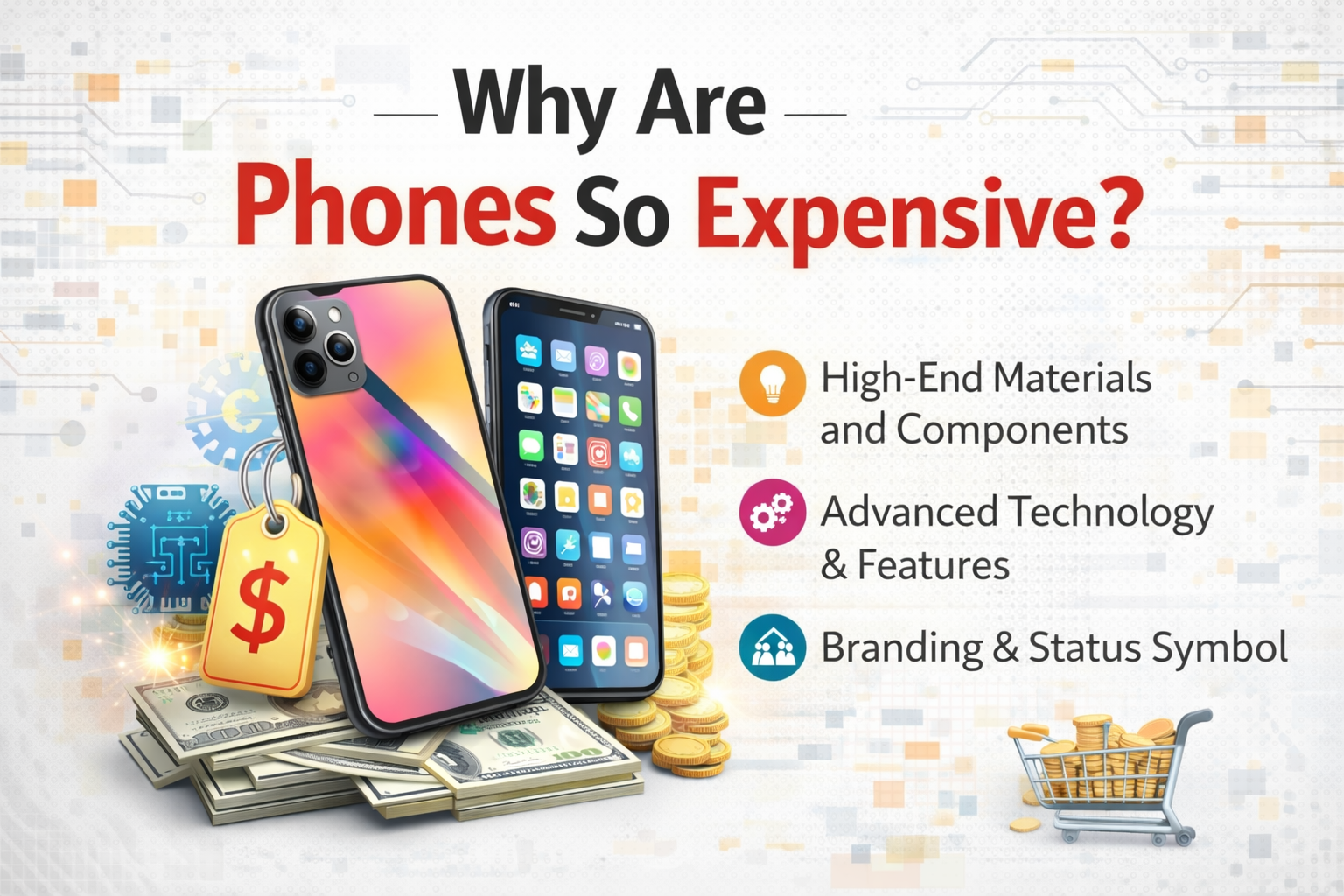
Nowadays, Smartphones are invaluable, nearly a virtual part of us. However, there is one question which makes buyers think twice each year: Why are phones so expensive? Premium models start regularly breaking the 1,000 mark, and even mid-range devices are not as cheap as they used to be. In the following blog, we will discuss the actual causes of rising smartphone prices.
Reasons why phones are expensive?
1. State-of-the-art Hardware does not do well on a budget
Smartphones of the present day are loaded with high performance:
- State-of-the-art processors such as Apple A-series or the Snapdragon processors of Qualcomm are fabricated by sophisticated manufacturing steps of either 5nm or 3nm.
- The displays have AMOLED technology with high refresh rates, which can provide beautiful images, but increases the cost of production.
- Multi-lens and high-tech sensor cameras compete with professional cameras.
- The backs of the products are made of materials such as ceramic backs, titanium frames, and ultra-strong glass to enhance durability, but it increases the costs.
This development of hardware is an expensive research effort, tooling, and production.
2. R&D Costs Run into Billions
Companies take years to research a phone before it even gets to the factory:
- New materials
- Battery efficiency
- Chip architecture
- AI-driven photography
- Wireless (5G, Wi-Fi 7, satellite connectivity) technologies.
One such example is Apple which is said to invest more than 25billion dollars in R&D annually and businesses recoup this cost in the prices of their products.
3. Artificial Intelligence and Software development.
Smartphones are no longer software, but AI-enhanced devices. Continuous software investment is required due to constant updates, security patches, voice assistants, and artificial intelligence photo editing. These intangible expenses cumulate in the long run.
4. Price is affected by Marketing and Branding.
Large smartphone releases are blockbuster releases. Brands spend millions on:
- Celebrity endorsements
- Social media campaigns
- Retail partnerships
- Launch events
When you purchase a phone you are also buying the marketing empire of the brand.
5. Chaos and Component Shortages in the Supply Chain.
The global supply chain has been challenged, from a shortage of chips to increasing prices of raw materials. There are also transportation, logistical, and inflation problems that drive prices up. The supply of high-end elements such as OLED displays and 5G modems is low, and this provides suppliers with bargaining power to demand higher prices.
6. Greater Life expectancy = Greater Price.
Smartphones have become longer-lasting and come with 5-7 years of software life. In order to remain profitable as people upgrade less frequently, companies increase initial prices. Unlike selling more units they are selling fewer devices at a higher margin.
7. Import Duties and Regional Taxes.
Most governments have import tax, GST/VAT, and domestic tariffs. India is one example and the taxes can go up to 40 percent on imported smartphones. That is why some countries have much higher prices of phones than the U.S. or China.
8. Profit Margins
Apple and Samsung are the leading brands that work with good margins. An example of this is Apple which has the highest profits in the industry. Although the bill of materials of an iPhone may be about half a thousand dollars, it is offered at a price of over one thousand dollars because of the design, software and ecosystem values.
9. The Ecosystem Effect
Smartphones represent an entry point to an even greater ecosystem: AirPods, Galaxy Buds, smartwatches, cloud services, applications, subscriptions. The reason why companies sell phones at high prices is that you are most likely to invest in their ecosystem in the long run.
10. 5G and Future Ready Connectivity.
The transition to 5G made smartphones much more expensive. 5G modem and antennas are much more complicated and demand additional space and power management system. With the development of networks to enable connection to satellites and Wi-Fi 7 networks, the cost of phone components will continue to rise.
In Conclusion
The issue with smartphones is that they are costly due to the combination of advanced technology, enormous research expenses, high brand names and economic factors. Prices might be fair but behind each device, there is a complicated ecosystem. The good news? The competition is increasing and with the present budget friendly phones, the quality of the phone is excellent- hence you do not necessarily have to spend a lot.
FAQs
Q1. Why does an increasing number of smartphones cost more annually?
The Smartphones are becoming more costly as a result of increased cost of superior hardware, AI-based software add-ons, challenges in the supply chain and increased investment in research and development. The final price is also being loaded with premium materials and marketing expenses within the company.
Q2. Are the high-priced phones worth the cost?
It depends on your usage. A high-end phone can be a worthwhile investment in case you need the advanced performance of playing games, taking photos and being productive. But to common users, medium-range phones have become very good in their performance at half the price.
Q3. Why are iPhones more expensive than Android phones?
Apple charged its iPhones more, which was a result of the investment into custom chips, extended software support, the brand name, and integration into the high-end ecosystem. Apple is also having high profit margins and is not involved in price wars much.
Q4. Are brand names causing phones to be more expensive?
Yes. Branding also plays a great role on prices. Such companies as Apple and Samsung price higher because of brand prestige, customer loyalty and perceived value- although the hardware price maybe the same as other low-end brands.
Q5. What is the reason why phones cost less in certain countries than in others?
The prices of phones fluctuate, due to the following factors; import taxes, value of currency, shipping cost, regional competition as well as government policies. As an illustration, in the U.S. and China phones will tend to be lower priced as compared to India or Brazil because mentoring duties have been imposed on imports.
Q6. Will the cost of smartphones ever reduce?
Premium flagship prices could be maintained high, but mid and low-end phones will keep rising in value. Affordable models have already started being used by many consumers and this can push brands into reconsidering their prices.
Q7. Should you purchase last year’s flagship phone?
Absolutely. The purchase of the flagship of the previous year is one of the most clever decisions. It offers high-quality performance and features at significantly reduced prices and is typically comparable to existing mid-tier phones.