Voice over Internet Protocol (VoIP) is being adopted in offices more and more. Indeed, the astonishingly big market is expected to hit $102.5 billion worldwide by 2026. Consequently, several businesses have dropped the landline telephone in favour of a new technology, which would also offer the same operations without involving a huge amount of hardware.
Since the increasing population is converting to VoIP in making their calls, individuals are beginning to question whether they require a special phone to make VoIP calls. VoIP also relies on the internet to make calls unlike the normal phone lines, thus offering you various options in terms of the type of device to use. With committed VoIP phones to smartphones, tablets, and computers, there are adaptable options for establishing VoIP or use them on a personal basis.
The following blog will help you understand the queries about having a special phone for VoIP.
What is VoIP?
VoIP is a communication technology which enables you to conduct phone calls with your broadband network rather than traditional landline phones.
The most common connection is the internet and a handset with a router. The phone system or handset employs the internet to send your speech as a normal traditional landline would. The only variation is that the technology behind it is not a landline but the Internet.
How VoIP Works?
VoIP is not like a conventional phone system. When using the traditional phone system, you are literally attached to a telephone line. This connects your telephone with your geographical location. In the business, traditionally it has involved the installation of telephone system which is costly and rigid as well.
VoIP does not provide this physical connection. Since you are using the internet to transmit your phone calls, you are no more limited to your physical telephone line.
You no longer need to develop your business phone system based on physical network, but rather ensure that it is developed to your unique needs.
You are free to be anywhere, as long as you have access to the internet. You may have as many as you like ringing anywhere you want, i.e. you may move your office easily, or establish a new one.
VoIP gives you the capability to path and redirect calls to any device and you may make and receive calls using any device including the regular landline phones.
Should I have a Special phone to use VoIP?
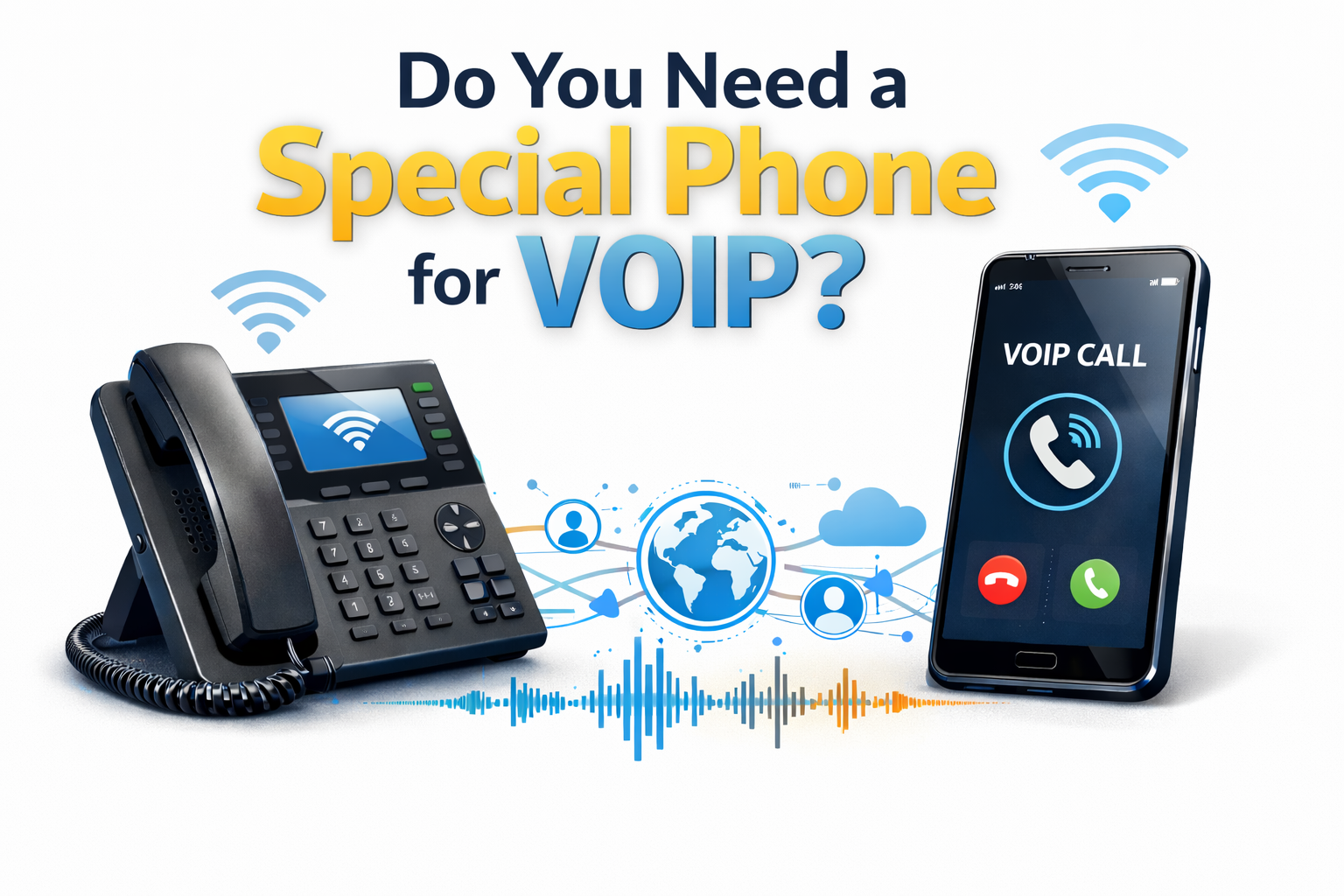
When you mention a VoIP phone, you are not referring to a single piece of equipment. A VoIP phone may be a smartphone, laptop computer, tablet, or any other device capable of accessing the internet. Using VoIP, you can also make a phone call with your laptop and not even a landline is in sight.
VoIP calls are also possible through the use of a conventional phone provided it is capable of the technology implemented in the VoIP networks and has an internet connection. Some older telephone systems may require additional VoIP equipment, such as a VoIP gateway to make VoIP calls.
VoIP equipment requirements.
Although the hardware requirements of VoIP phones are not as significant as those of a typical phone line system, there are still a set of necessary equipment and additional notes that are necessary in order to add functionality and optimise the user experience.
- Modem and router
VoIP hardware is required by the modem and the router. The modem and the router used in combination allow communication of devices with the internet.
The modem is what provides you with an access to the World Wide Web since it is the device that connects you to your internet service provider (ISP). Modem transmits and receives in an analogue format the digital signal which can be sent by a phone line or radio signal (wireless modem). Ironically, phone line infrastructure is also part of VoIP hardware even when VoIP is used.
The router on the other hand enables several devices to share the same network and also enables it to direct the data packets to the correct destination within a network. This device recognises the recipient in terms of the Internet Protocol address.
Optional VoIP equipment
Although it is true that the modem and the router are the only absolutely necessary VoIP needs, there are other VoIP phone equipment to take into account that can make your experience better.
- VoIP gateway
VoIP gateway is a device which translates the analogue telephone system signals into data packets of VoIP. It is also able to support tens of calls (a hundred or more) at once so you can retain the infrastructure of your older phone system and enjoy the rewards of VoIP.
It also enables flexible communication among the internet and the Public Switched Telephone Network (PSTN) that is the outdated landline telephone system that has been in use for over the past 100 years. That is, so to speak, still able to make your calls using your computer over a VoIP gateway and have the flexibility that a VoIP provides. The major benefit of a VoIP gateway is the connection it offers, as it enables the construction of an expanded system than is not possible with landlines or simple VoIP.
Another option that may be valuable to large teams, a VoIP gateway also will make the cost of switching to VoIP and phone system changes less expensive and is a worthy investment, although this is not always a requirement of VoIP systems.
- VoIP desktop phones
VoIP desktop phone resembles a regular and conventional telephone, and this kind of feature may make users who are not accustomed to the VoIP technology feel more at home as they get used to their features such as an inbuilt display to identify the caller and quick dial, and buttons to various functions such as hold, transfer, and conference calls. Others could also have jacks that could support headsets or other accessories such as microphones, wireless headset adapters, and cameras among others.
- VoIP headset
A VoIP headset ( earphones and a microphone ) will enable you to use your hands-free. A VoIP headset is connected straight off to a computer or other device instead of a VoIP desktop phone. The headset can also be equipped with more features in certain instances like noise-reducing technology to enhance the quality of the call.
The use of VoIP desktop phone or a VoIP headset can eventually be a matter of personal choice. The characteristics provided by each of them can help to make VoIP calls more comfortable and user-friendly for the employees.
VoIP is suitable for which type of businesses?
VoIP is an apt technology for any business in the UK (of any size) that is interested in enhancing its flexibility, cost-saving and growth potential. VoIP is particularly effective when used by companies that have remote employees, when they aim at enhancing or substituting the existing system, and when they require a flexible, dynamic system of communication.
Certain companies can use VoIP.
- Startups – VoIP can offer a serviceable and simple to utilise communication platform to new ventures and start-ups.
- Expanding companies – VoIP phone is ready to accommodate and serve the new employees and places as a company expands.
- The businesses having remote teams – VoIP enables easy communication of remote teams without consideration of where they are.
- Companies that require more sophisticated services – VoIP offer many sophisticated services including video conferencing and CRM applications. Moreover, the transition to VoIP is also becoming inevitable as the PSTN lines are being done away with.
- Corporations that need to upgrade their outdated systems – VoIP is a new and less expensive replacement of the outdated phone systems.
- High call volumes or international reach – the customers of the industries with high volume would enjoy the security and reliability of communication. This also helps in effectively managing of calls of E-commerce customer care.
In Conclusion
VoIP is particularly changing the world of business communications, enabling businesses to save on costs and still be in a position to maintain their standards of quality communications. Through the use of modern technology and analytics, VoIP is able to support smart communication systems, which can position the needs of the expanding global networks, thus defining the future of communication technology.
FAQs
Q1. What is the internet speed required in VoIP?
Each call should have at least 100 kilobits per second upload and download speed.
Q2. Is it possible to retain my old phone number?
Yes, you can retain your original phone number – we have a team of expert professionals at VoIP business who are determined to move customer phone numbers of the existing landlines into new VoIPs without any problems.
Q3. Am I required to have special VoIP telephones?
No, you are not going to need a special VoIP telephone, but you are going to need a VoIP-compatible telephone. The majority of the current hardware can support VoIP, though, as always, it is best to confirm with your provider whether this is the case of your current telephone.
Q4. Is VoIP dependable on making emergency calls?
VoIP systems, at times as strong and more dependable than standard landlines, are, however, limited, in case of an emergency. This is because of their dependency on the internet which cannot be trusted whenever there is a failure in connection.
Q5. What about a current contract with a landline carrier?
In the event of switching to VoIP, inform your current service provider once you have acquired a new VoIP service.
Q6. What should the company take into account before transforming the telephone system into VoIP?
Switching to VoIP system, you should be aware of your internet speed, compatibility of your existing phone and possible downtime during the switch.
Q7. What is the difference between VoIP and WIFI calling?
VoIP is a technology in general and allows voice communication to be conducted over an internet connection whereas WIFI calling is a particular feature that uses VoIP to call and receive the call over a WI-FI network.