In a world where chatbots dominate the world of business communication, you would assume that people hardly ever pick up the phone to get business in touch. However, the truth is not so. Calling is among the most used methods of seeking support.
The same is true in the case of popularly text-preferring millennials and Gen Z. A study conducted by McKinsey shows that 71 percent of the younger clients still use phones when interacting with businesses. That is why, it is worth enhancing your communication abilities through voice by establishing an inbound and outbound call center.
But what is the difference between an inbound and an outbound call center?
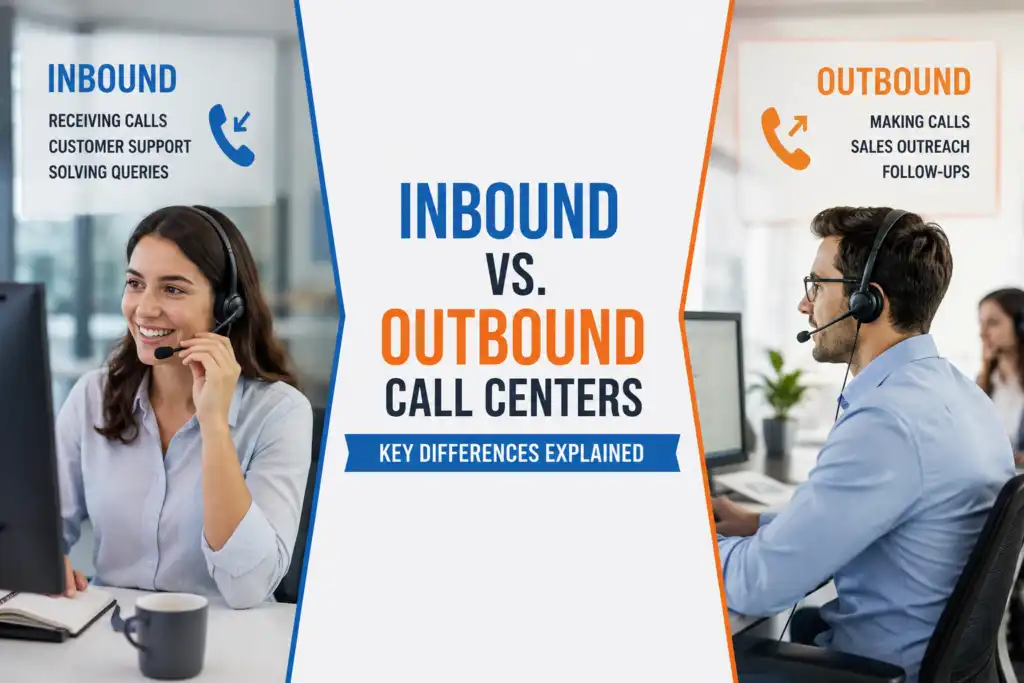
What is the Inbound Call Center?
An inbound call center is concerned with receiving calls from current and prospective customers. Customer service and technical support is conducted by inbound agents. Nevertheless, they may also have to handle sales inquiries, handle subscription requests, refresh CRM databases, adopt new clients, and obtain feedback.
Inbound contact center software is also dependent on self-service applications such as Interactive Voice Response (IVR) and AI-based virtual agents in addition to live agent support. They rely on voicebots that resolve common queries with technologies such as Natural Language Processing (NLP). In case of more complicated queries they apply smart routing and send the calls to the most appropriate agent.
No matter how the problem is sorted either with automation or by an agent, the purpose of the inbound call center is the same; to provide quick, efficient customer care and a superior customer action.
What is an Outbound Call Center?
The outbound call center is aimed at making outbound call strategy towards the existing and new prospects. In this case, the work of the agents is mostly connected with sales-related activities that include cold calling, lead qualification, product promotion, and subscription management. They also deal with the proactive customer outreach, support follow-ups, feedback collection, and surveys.
Besides live agent interactions, outbound call center may also employ automation devices such as predictive dialers, voicemail drops and lead management systems. Others also include the use of AI to study data on customers, segmentation of lead lists, and tailoring outreach strategies. This can be used to make sure that agents reach out to the most relevant contacts.
Types of Inbound Calls
The types of inbound calls received are all forms and shapes, although most of them are of four kinds.
1. Customer Service
This is the time when a present customer calls having a question or concern or to maintain his or her account. These calls include:
- Returns
- Customer feedback
- Changes in addresses of mail
- Inquiries concerning policies, practices etc
In most situations, such concerns are easier to handle electronically, and most inbound call centers have started to record and play the recording to the customer who is on the holding queue, referring them to the relevant online resources.
2. Technical Support
This is where the customers make calls when there is a break on their side. When a product is not performing well, customers are likely to make calls in an effort to correct the situation. It may be an unresponsive cell phone that is not receiving GIFs, or a computer that is not starting, but technical support is more likely to hear complaints of unhappy customers with the existing situation.
Due to the aggravated temper of the majority of the calls, inbound centers dealing with technical support also need personnel who are patient and level-headed, to be able to handle complaints and demands.
When the right group is involved, the issues can be resolved and tempers no more, returning the brand loyalty and prompting return sales.
3. Inbound Sales
Some cases involve having the inbound call centers receive calls not only by the existing clientele, but also by the prospective buyers who are seeking additional information. When this occurs then it is known as an inbound sales call and the skilled personnel can make use of the opportunity. This is where tact and salesmanship is paramount and a pleasant and hospitable face on behalf of the company may result in a lead being transformed into a customer.
There are cases of larger businesses which maintain a separate call center that focuses on inbound sales, as opposed to incorporating multiple types of calls. When this occurs, the company can staff the center with sales in mind and enable the company to put on its best foot forward.
When making an inbound sales call, the representative must initially seek to develop a rapport with the prospect, finding a ground on which to share and provide helpful information. They are also expected to allow the prospect to lead the discussion, pose open questions and be open to build the trust of the prospect.
4. Renewal and Upgrade Question Calls
This type of inbound call makes contact with current customers who have decided to renew, upgrade, upgrading or consolidating their subscription packages. Customers normally feel content with the type of service that they are given by the business, consequently they maintain the relationship.
The inbound center agents are expected to be knowledgeable about the available product line of the company, current promotions and the benefits of retaining or upgrading their plans.
Besides being educated and persuasive, they should be trained to process the renewal or upgrade themselves or help the customers through referral to a qualified sales agent to expand the plan.
5. Processing Orders and Payment
Internet ordering is the order of the day in this century, yet there exist a large number of individuals who make orders via telephone.
That is why inbound calls to call centers will be specialized in making, processing or managing purchases. The shoppers might also visit to ask questions concerning the purpose of payment of their purchases and address their payment issues.
6. General Inquiries
Your products and services will always be subject to questions by customers. They may require knowing your working hours, having more details about specific services, or handling some of their account, but in any case, a call center agent will have to know your business inside and out such that they can help any inbound caller effectively.
Types of Outbound Calls
1. Appointment Setting
Outbound agents make appointment or setting of meetings with the customer or lead to the assigned salesperson. They will affirm the ideal time and date when the current or the potential client will be able to meet with a representative of a company. The agent has to be both effective and accurate, but also pleasing, so that they will keep coming back.
2. Lead Generation
Leads are generated by outbound agents through warm and cold calls through which they identify the potential of making someone interested in the company products. They collect data as they make the call and decide the level of potential that a prospect will become interested enough to become a customer.
3. Telemarketing
Telemarketing is not the same as lead generation; in fact, it could be said that a telemarketer is like a door-to-door salesperson. These sales agents make their sales calls over the phone with regard to a target list. They create enthusiasm in the product or service by narrating the possibility of how it can make the best solution to the needs of the prospects.
4. Telesales
Telesales is often confused with telemarketing and has a different ultimate objective in mind, to make the sale. The role of telemarketers are taken by sales agents. They must be tolerant and convincing both to follow quality leads and then turn them into sales.
The telesales agents must also have a good list of qualified leads as their output solely relies on the rates of conversion.
5. Market Research
Not all outbound calls aim at closing sales: some of them are conducted to understand the pulse of a product, service, or brand. It is during the call that an agent will pose a series of questions developed by the business or market researcher to know more about the target audience (and their perception about the company or product). The obtained data will be analyzed to adjust products or change the marketing strategies.
Inbound vs Outbound Call Center
| Functions | Inbound Call Center | Outbound Call Center |
| Purpose | Answers customer calls in regards to service, support, or product inquiries, onboarding, or complaints. | Calls out to make sales, promotions, bring in leads, surveys, reminders, and collect payments. |
| Interaction Initiation | Customers who require help or information make calls. | Agents make calls in advance to proactively reach out to leads or customers. |
| Key Metrics | First Call Resolution (FCR), Avg. Handling Time, Customer Satisfaction After Contact (CSAT), Retention Rate, Wait Time. | First Call Close, Occupancy rate, Conversion Rate, Cost per Acquisition, Hit Rate, and Lead Response Time. |
| Primary Focus | Providing quick, efficient customer services, and technical support. | Making sales, leads, prospect qualification and feedbacks. |
| Technologies Used | ICall Queuing, Call Monitoring, Skill-based Routing, Real-Time Dashboards,IVR, and ACD | Custom Caller ID, Lead Management,Predictive/Power/Preview Dialers, Click-to-Call, Call Disposition Tools. |
| Nature of Operations | Prompt reply to customer queries / issues. | Active outreach in order to connect with prospective or existing customers. |
| Customer perception | Considered to be helpful and responsive. | May be considered as violating when excessive, but as appropriate when appropriate and respectful. |
| Sales impact | Retention and satisfaction friendly but not mostly sales based. | More sales oriented; can be superior in generating new revenue. |
Final Words – Inbound and Outbound Call Centers
The type of assistance you require regarding inbound, outbound, or both inbound and outbound calls will all be determined by the kind of pain points your team is having difficulty managing.
In case you are unable to maintain the pace of the customer service and technology support calls, then you are likely to need support of an inbound call center. An outbound call center can be the best fit in case your team cannot be able to follow up on a long list of leads.
Anyhow, when your business is expanding and your staff is overwhelmed, you might certainly need the services of call center. It could be a good customer service team that you require or it could be a couple of sales superstars who could spread the word about your amazing product or service, it highly depends on finding the right call center.
FAQs – Inbound and Outbound Call Centers
Q1. What is the process of the inbound voice?
The inbound voice process entails the agents getting and handling calls by the customers who are in need of support or information or services. It aims to offer responsive customer services in a timely, helpful manner and establish long-term customer loyalty and trust.
Q2. What is Quality Assurance in an Inbound and Outbound Call Center?
Quality Assurance (QA) assures that the calls are up to the expectations of the service and up to the aims of the business. At inbound contact centers, the QA verifies the accuracy of response, empathy, and the issuance of a resolution. It pays attention to pitch quality, compliance and handling of leads in outbound contact centers. QA enhances performance, customer satisfaction, and regulatory compliance in all interactions.
Q3. What are the skills needed to work at an outbound call center?
The Agents of Outbound Call Center should have good communication skills, persuasiveness and capacity to cope with rejection since their main role is to make contacts and connect with prospective customers.
Q4. What are the roles of Customer Service Representatives in an inbound call center?
Inbound Call Center Customer Service Representatives are required to offer the necessary customer services by helping them solve their problems, fixing technical difficulties, and ultimately making them happy.
Q6. What is an outbound call center?
An Outbound Call Center refers to a centre where potential or current customers are contacted with initiative by the Outbound Call Center Agents to create sales, perform surveys or seek feedback.
Read More : A Complete Guide to Cloud VoIP for Modern Businesses